





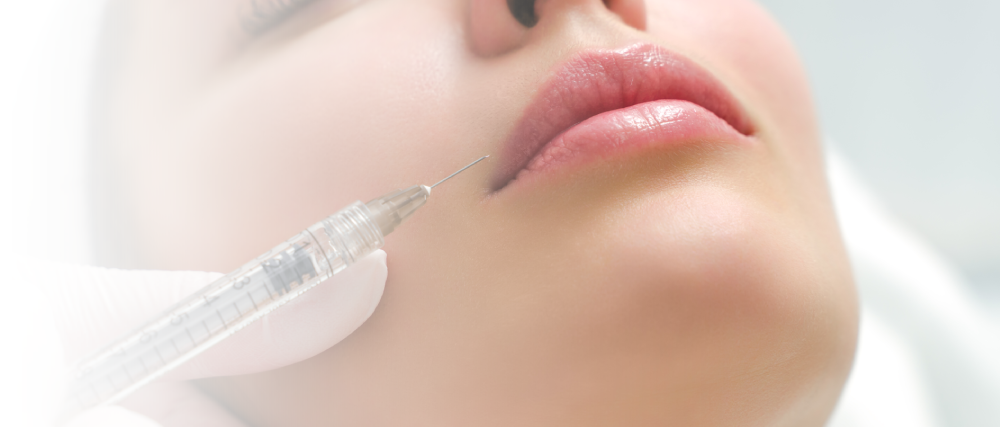
What Is Filler?
Filler is a substance mainly composed of Hyaluronic Acid (HA), which naturally exists in the body. It helps retain moisture, adds volume, and restores structure to the skin. Filler is commonly used to correct facial concerns such as wrinkles, deep lines, sagging skin, facial contouring, and volume loss, resulting in a more youthful and refreshed appearance.
Which Areas Can Fillers Be Injected?
Fillers can be injected into many areas of the face, depending on the concerns and desired results:
- Under-eye filler
Reduces dark circles, hollowness, and tired-looking eyes. Helps the under-eye area appear smoother and brighter. - Cheek filler
Enhances facial structure, lifts sagging cheeks, and creates a more youthful, natural look. - Nasolabial fold filler (smile lines)
Reduces deep lines from the nose to the mouth caused by aging and facial movement. - Lip filler
Adds volume, improves lip shape, enhances definition, and helps correct asymmetry. - Chin filler
Improves facial balance, sharpens the chin, and creates a more proportionate face. - Jawline filler
Defines the jawline, improves facial contour, and creates a sharper, more structured look. - Temple filler
Restores volume in sunken temples, making the face look fuller, younger, and healthier. - Forehead filler
Smooths the forehead, enhances facial harmony, and reduces wrinkles and indentations.
How Many CC of Filler Are Used for Each Area?
The amount of filler used varies depending on the individual and the specific concern in each area.
- Chin filler: approximately 1–2 cc
- Cheek filler: approximately 1–2 cc
- Nasolabial fold filler: approximately 1–2 cc
- Lip filler: approximately 1–2 cc
- Nose filler: approximately 3–6 cc
- Jawline filler: approximately 3–5 cc
- Temple filler: approximately 2–3 cc
- Forehead filler: approximately 3–5 cc
Are Filler Injections Dangerous? What About Allergic Reactions?
Many people worry that filler injections may be dangerous. In fact, fillers used today are highly safe and can naturally dissolve in the body. They do not leave permanent residue and can be reversed if necessary.
Filler injections are generally safe when performed by experienced medical professionals using certified products. The main ingredient in most fillers is Hyaluronic Acid (HA), a substance naturally found in the human body. HA can be safely broken down and absorbed, making filler treatments both effective and safe.
How Are Different Filler Brands Different?
There are many FDA-approved filler brands available, such as:
- Neuramis – South Korea
- Revanesse – Canada
- EPTQ – South Korea
- Yvoire – South Korea
- Belotero – Switzerland
- Juvederm – United States
- Restylane – Sweden
- Perfectha – France
Each filler brand differs in production technology, molecular structure, and texture. These differences affect the softness, durability, and suitability for different facial areas. As a result, physicians carefully select the most appropriate filler brand and type for each treatment area to ensure optimal and natural-looking results.
Fat Grafting vs. Filler: Which One Is Better?
Filler Treatment
- Takes about 30 minutes – 1 hour
- Results are noticeable immediately, with minimal swelling and quick recovery
- Little to no downtime
- Results last 8–24 months, depending on the type of filler used
- No surgery required
- Cost depends on the number of CC used
Fat Grafting
- Takes about 2–3 hours
- Swelling may last approximately 3 months before final results are visible
- More swelling compared to fillers
- Results may last long-term, but typically 30–70% of the fat survives, depending on the individual
- Requires 1–2 days of recovery
- Generally more expensive than fillers, as it involves a surgical procedure