


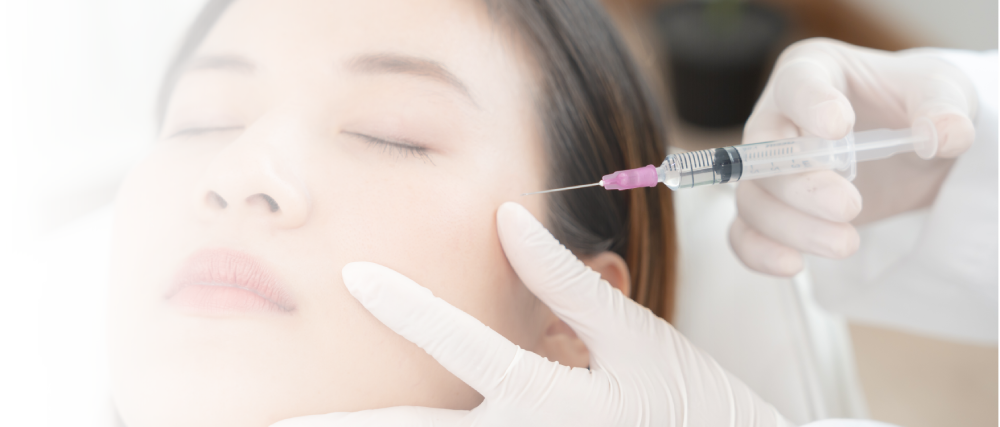
What Is Botox?
Botox is a treatment that uses Botulinum Toxin Type A, a purified protein derived from the bacterium Clostridium botulinum. When injected in controlled amounts, it helps temporarily relax targeted muscles by blocking nerve signals (neurotoxin). This reduces muscle movement, softens wrinkles, and helps adjust facial contours for a smoother, more youthful appearance.
Where Can Botox Be Injected and What Does It Help With?
Forehead Botox
Forehead Botox helps reduce wrinkles caused by facial expressions and muscle movement. By relaxing the muscles using Botulinum Toxin
(a neurotoxin), it reduces muscle contraction, smooths fine lines, and creates a more youthful, refreshed appearance.
Wrinkle Botox
Botox injections are commonly used to treat wrinkles on areas such as the forehead, between the eyebrows, around the eyes, and on the cheeks. Botox helps soften expression lines and prevent new wrinkles from forming. Results typically last 3–4 months, depending on individual muscle activity.
Jaw Botox (Masseter Botox)
Jaw Botox involves injecting Botulinum Toxin into the jaw muscles to reduce muscle size and tension. Typically 50–100 units are used, helping reduce muscle volume by 20–30%, resulting in a slimmer face. Results can reach up to 80% improvement, depending on the individual.
Lip Botox
Lip Botox uses small amounts of Botulinum Toxin to relax muscles around the lips, helping improve lip shape and reduce lip stiffness. Results usually last around 3–4 months, depending on muscle movement and individual response.
Facial Lift Botox
This technique involves injecting Botox using specialized facial-lifting techniques to gently tighten the skin. It stimulates collagen production, improves skin firmness, and enhances facial contour naturally, creating a more youthful and lifted appearance.
Neck Botox
Neck Botox targets neck and jawline muscles to reduce sagging and soften lines. It helps relax muscles such as the platysma, improving skin tightness and reducing the appearance of wrinkles. Results typically last 4–6 months. It can also help refine the jawline for a smoother contour.
Is Botox Dangerous?
Botox is a substance derived from the bacterium Clostridium botulinum. It works by affecting the nervous system (neurotoxin), temporarily reducing muscle activity and muscle contraction. When administered by experienced medical professionals using proper techniques and appropriate dosages, Botox is considered safe and effective, delivering reliable results with a high level of safety.
What Are the Available Botox Brands?
There are several Botox brands available, each with different manufacturing technologies and characteristics, including:
NABOTA FDA-approved and highly trusted. Nabota is a premium-grade Botox from South Korea, known for its high purity and consistent, reliable results.
Aestox Ideal for first-time Botox users. Aestox is a Korean Botox brand that has received approval from Thailand’s FDA. It offers high purity and effective wrinkle reduction with natural-looking results.
Allergan A globally recognized Botox brand with over 30 years of research and development, backed by more than 4,000 international studies. Allergan Botox is known for its high safety standards, effectiveness, and long-lasting results.
Dysport A Botox brand from the United Kingdom, known for its ability to spread evenly. It is suitable for wrinkle reduction, facial lifting, muscle relaxation, and treatment of conditions such as excessive sweating. Dysport has no reported cases of antibody resistance.
Xeomin Also known as “pure Botox,” Xeomin contains no complexing proteins, reducing the risk of antibody resistance. It is highly effective in blocking nerve signals and is widely used for patients who require high-quality Botox with consistent results.
How Long Does It Take to See Results from Botox, and How Long Does It Last?
After Botox injections, results typically begin to appear within 3–7 days, with full results visible in about 14 days, depending on the individual and the type of Botox used.
The effects of Botox generally last 3–6 months. Botox naturally dissolves in the body and leaves no residue.
Why Doesn’t Botox Work for Some People?
If Botox does not show noticeable results, common reasons may include:
Use of diluted or low-quality Botox, resulting in reduced effectiveness Injecting Botox into incorrect muscle layers or positions, causing it to spread improperly Strong muscle activity or individual muscle structure affecting the response Botox injections that are too frequent or too far apart For optimal results, Botox injections should be performed by experienced medical professionals using proper techniques and appropriate dosages. Treatments are generally recommended every 3 months, and injections should not be spaced too far apart (no longer than 5–6 months), as muscle activity may fully return and reduce the effectiveness of subsequent treatments.